
Review · SNOWSHOEING TOURS
Explore Winter Woods: Snowshoe walk with local Biologist
The best part of this Inari snowshoe outing is not speed or distance. It is the chance to slow down in ancient Lapland forest with Terhi, a local biologist who can explain what you are seeing under the snow. You may follow fox or hare tracks, watch Siberian Jays near a feeding area, and learn why a quiet stand of trees matters in Arctic life.
I especially like the small maximum of six people, which gives you room to ask questions. I also like the warm finish in a kota, with coffee or tea, homemade treats, and local food beside an open fire. The main consideration is weather and stamina: wildlife sightings are never promised, and snowshoeing can feel demanding for young children or anyone unused to walking in deep snow.
Key points to know before booking
- Ancient forest setting: Walk among old woods, lakes, and quiet mires near Inari.
- Biologist-led outing: Terhi explains Arctic plants, trees, animal tracks, birds, and changing seasons.
- Small group size: The experience accepts no more than six people.
- Wildlife watching: Siberian Jays and Siberian Tits are common possibilities, while elk, Mountain Hare, fox, and other signs of life may appear.
- Fire hut finish: Warm up with hot drinks and local snacks in a traditional kota.
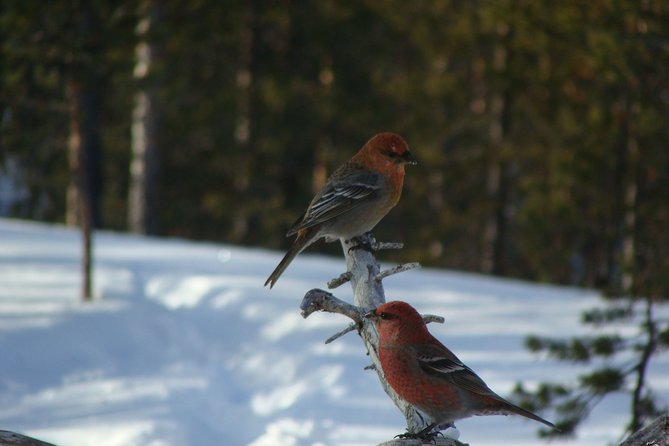
- Good timing matters: From mid-February or early March, you may begin looking for returning Pine Grosbeaks.
A gentle start to Lapland’s winter woods
This is a nature walk with snowshoes, but it is also a short introduction to life in the far north. At the start, you learn about the hosts’ home and daily life in the Arctic, where bushcraft is not just a holiday skill. It is part of knowing how to live comfortably and responsibly in the woods.
That personal beginning helps set the tone. You are not simply following a marked route while someone points at trees. Terhi and Arto share the practical side of their surroundings, including how people read the forest and adapt to winter. The experience feels more personal than a large coach excursion, in part because the group is limited to six.
The meeting point is at Terstontie 123, 99870 Inari, with a 10:00 a.m. start. The activity lasts about two and a half hours and finishes back at the meeting point. Some arrangements have included hotel pickup and return to Inari, but you should confirm that option when booking rather than assume it is included.
More Snowshoeing Tours in Lapland:
- Snowshoeing in Pyha-Luosto Lapland
★ 5.0 · 13 reviews - Scenic Snowshoeing on the Top of Pyhä Fell
★ 5.0 · 10 reviews - Premium Snowshoeing in Pyhä-Luosto National Park
★ 4.5 · 6 reviews
Snowshoes, old trees, and quiet mires
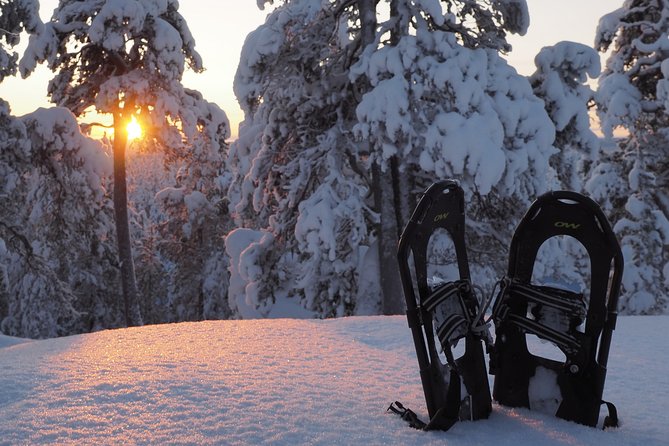
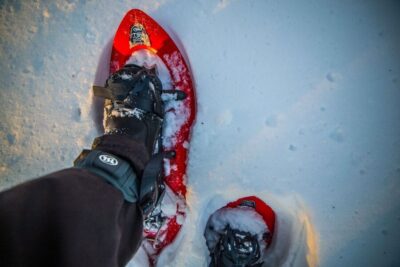
After getting equipped, you head into the woods. Snowshoes spread your weight over the snow, allowing you to walk where ordinary boots would sink. You should still expect some effort. This is not a fast, groomed-path stroll, and the fun comes from moving slowly enough to notice small details.
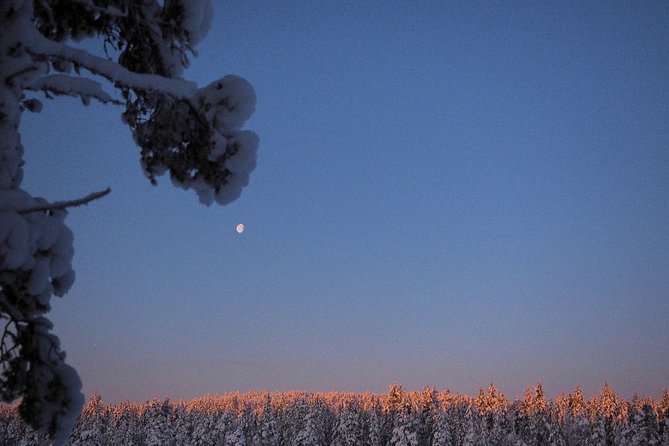
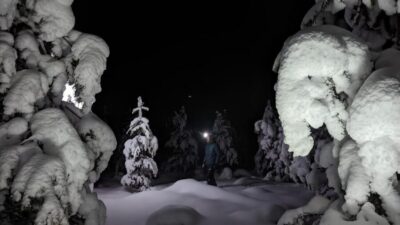
The forest is described as one of the oldest in Lapland. That does not mean every tree is enormous. In the Arctic, cold weather and a short growing season shape the woods in their own way. Terhi can help you read the mix of trees, plants, and ground cover, and explain how these elements support animals through the long winter.
The route passes lakes and mystic mires. In winter, these places have a spare, quiet feel, with snow covering much of the surface. Their value is not only scenic. Wetland areas help support plant life and wildlife, and they form part of the wider Arctic system you are learning to understand.
I would book this walk early in a Lapland visit if you want a better sense of the region. One family found that the outing helped them understand the natural environment during the rest of their stay. That is a useful point: the information you pick up here can make later walks, drives, and wildlife excursions more meaningful.
Reading tracks instead of chasing animals
Wildlife is handled in the right way here: you look for signs and possibility, not a guaranteed show. Snow can preserve tracks, but fresh snowfall may also cover them. A quiet day with few clear prints is still a good day in the woods, though you should set your expectations accordingly.
You may find tracks from foxes or hares. Learning to tell the difference gives you a skill you can use on later walks. Mountain Hare is one of the possible sightings, and elk may also appear if conditions and luck line up. The experience does not promise either animal, so book it for the forest knowledge first and the sightings second.
Bird activity offers another focus. Siberian Jay and Siberian Tit are commonly found nearby, especially around feeding areas. Rather than rushing from one attraction to another, you may spend time watching birds move through the trees and learning how they cope with the cold.
Seasonal timing adds another layer. From mid-February or early March, the guides begin looking for the first Pine Grosbeaks returning to the area. If birdwatching matters to you, this later winter window may be especially appealing, though the tour remains dependent on conditions and the birds themselves.
One of the most pleasing details is that wildlife watching continues at the end of the outing. From the fire hut, you may see birds flying nearby while you eat and drink. The warm indoor setting gives you a second chance to watch nature without standing in the cold.
Terhi’s nature lessons and local context
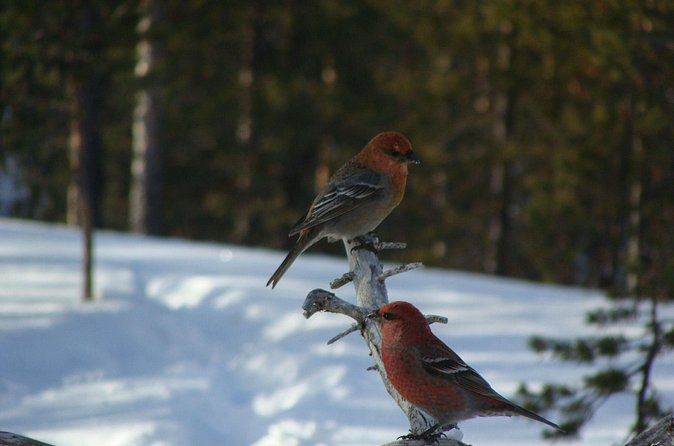
Terhi is the central guide for much of the natural history. Her background as a biologist gives the walk a clear educational purpose, but the tone is not presented as a formal lecture. You can ask about plants, trees, vegetation, animal behavior, and the effects of climate change.
That last subject is worth noting. Arctic ecosystems respond quickly to changes in snow, temperature, and seasonal timing. The guide connects what you see in the woods with broader environmental concerns, giving the outing more substance than a simple winter activity.
Arto also contributes to the experience. He has explained Arctic animals, local life, and Sami culture, and he may share information during the drive back to Inari. Another account also mentions hearing about northern lights tours that the couple can arrange, though that is separate from this snowshoe walk.
The local and cultural content is best treated as an added benefit, not the main focus. The core of the outing is the forest, wildlife, and Arctic ecology. Still, learning how people relate to the land makes the walk more grounded and helps you see the setting as a lived-in home rather than a pretty backdrop.
More Walking Tours in Lapland:
- A Finntastic Walking Tour in Helsinki
★ 5.0 · 700 reviews - Epic Helsinki: English Speaking Walking Tour
★ 4.9 · 192 reviews - Helsinki walking tour with a city planner
★ 5.0 · 175 reviews - Helsinki Walking Tour – Small Group
★ 5.0 · 155 reviews
The kota, fire, and local food
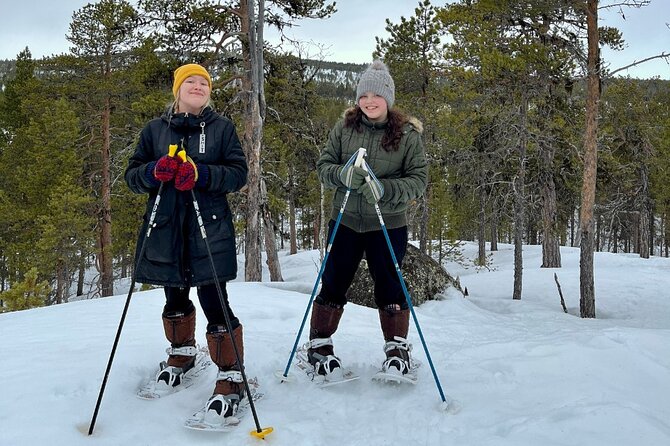
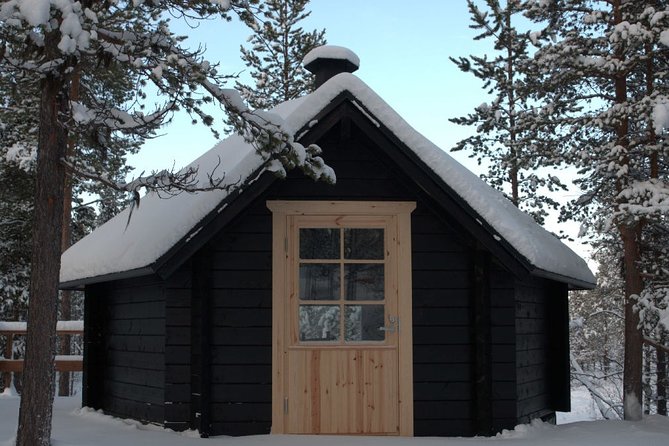
The final stop is a traditional kota, a hut built around an open fire. This is where the outing changes pace. You remove your snowshoes, settle in, and warm up with coffee or tea and local snacks.
Food details can vary, but the experience has included homemade buns, muffins, cheese, and a toasted snack made with moose. One light lunch included local produce. The food is not a full restaurant meal, so do not book this as your main lunch plan unless the provider confirms what will be served that day.
The fire hut is more than a practical warm-up stop. It gives you time to talk with Terhi and Arto, ask follow-up questions, and watch nearby birds. The hospitality is a major part of the appeal, especially for independent visitors who prefer meeting local people over joining a large commercial group.
There is also a nice rhythm to the day. You begin with an explanation of Arctic life, walk through the forest, look for tracks and birds, then end with food and conversation. At roughly two and a half hours, the activity has enough time to feel like a real outing without taking over your entire day.
Is $114.02 a fair price?
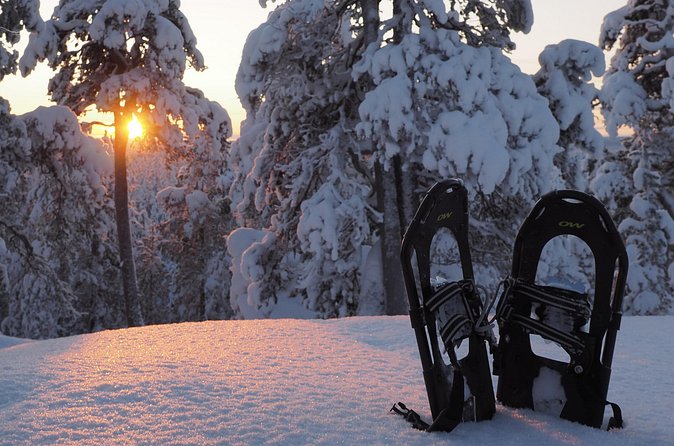
At $114.02 per person, this is not the cheapest way to spend a morning in Inari. The price makes more sense when you look at what is included in the experience itself: a small group, snowshoe equipment, a specialist guide, access to a private-feeling forest setting, and food and drinks around an open fire.
You are paying for interpretation as much as for transport or equipment. If you already own snowshoes and only want a marked trail, this may feel expensive. If you want to understand the forest and have someone identify tracks, birds, and plants, the value improves.
The group limit is important. With no more than six people, Terhi can adjust the pace and answer individual questions. A large group would make track watching and bird observation harder, and it would weaken the relaxed feel around the fire.
The independent nature of the business also matters to some visitors. AT Nature is run by Terhi and Arto, and the experience centers on their home, their knowledge, and their way of living in the region. You are supporting a small local operation rather than choosing a standard high-volume excursion.
Who will enjoy this walk most?
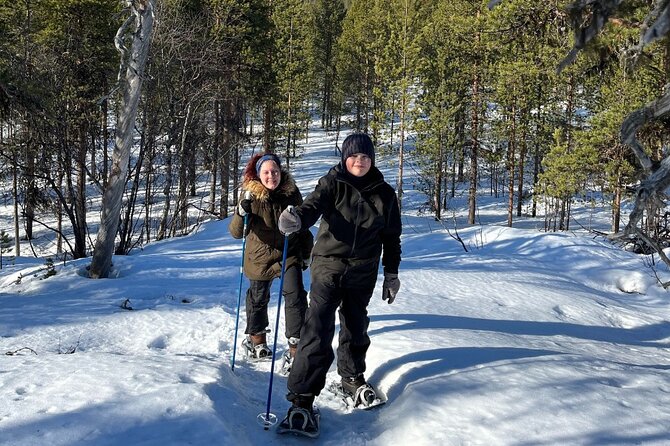
I would recommend it to adults, couples, families with older children, and anyone who wants a quieter alternative to snowmobiles or crowded activity centers. It suits people who enjoy asking questions and noticing details.
An 11-year-old joined successfully, but very young children may struggle with the length, cold, or need to pay attention. The provider says most people can participate, and service animals are allowed, but the walk still involves snowshoeing outdoors. If you have concerns about a child’s attention or walking ability, contact Terhi before booking.
This is also a strong choice for independent visitors. The tour helps you understand the area early in your stay, and the small group makes it easier to build a real conversation with the guides.
You may want something else if your top priority is a guaranteed animal encounter, a long athletic trek, or dramatic views of the northern lights. This outing is about forest detail, not spectacle. It can remain worthwhile even on a snowy day when tracks and wildlife are hard to find, but that requires an appreciation for the woods themselves.
Practical planning for your morning
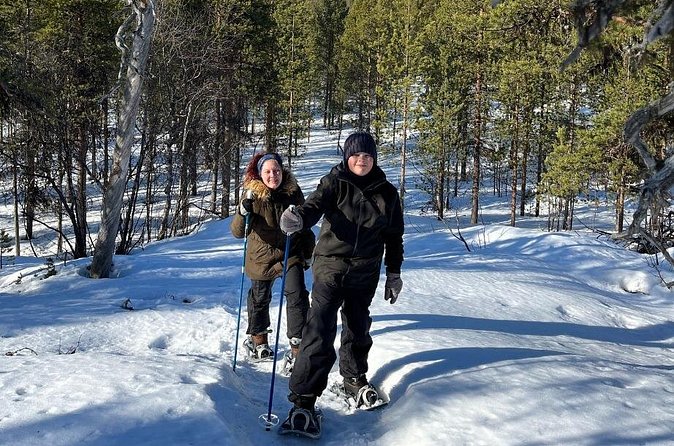
The tour is offered in English, and confirmation arrives at booking. It is booked on average about 25 days ahead, so reserve early if your Inari dates are fixed, especially during the busiest winter period.
Wear clothing suited to extended time outdoors in Lapland. The supplied information does not list a full clothing checklist, so ask the provider what boots, layers, and gloves are supplied before you arrive. Snowshoes and boots have been fitted for participants on past outings, but you should confirm current equipment arrangements.
The experience requires suitable weather. If poor conditions force cancellation, you can choose another date or receive a full refund. A minimum number of participants is also required, and if that number is not reached, the provider offers another date, another experience, or a full refund.
Free cancellation is available up to 24 hours before the 10:00 a.m. start. Changes or cancellations inside that window are not accepted for a refund, and the cut-off uses local Finnish time.
Should you book the Explore Winter Woods walk?
Book it if you want a small, personal introduction to Arctic nature and you value learning more than checking off a dramatic sight. Terhi’s biology background, Arto’s local knowledge, the old forest, and the fire-hut meal create a rounded experience that works especially well near the beginning of a Lapland trip.
Go with realistic expectations. You might see Siberian Jays, Siberian Tits, tracks, or even elk and Mountain Hare, but wildlife is never guaranteed. If you can enjoy a silent forest, a good explanation of what lies beneath the snow, and a hot drink by the fire, the $114.02 price is reasonable for this carefully sized outing.
FAQ
Where does the snowshoe walk start?
It starts at Terstontie 123, 99870 Inari, Finland, and ends back at the same meeting point.
What time does the activity begin?
The scheduled start time is 10:00 a.m.
How long does the experience last?
The snowshoe walk and related activities take about two hours and 30 minutes.
What language is the tour offered in?
The experience is offered in English.
How many people can join?
The group has a maximum of six participants.
What wildlife might I see?
You may look for Siberian Jays, Siberian Tits, elk, Mountain Hare, and animal tracks. From mid-February or early March, the guides also begin looking for returning Pine Grosbeaks. Wildlife sightings are not guaranteed.
Can I cancel for a full refund?
Yes. You can cancel at least 24 hours before the local start time for a full refund. If the provider cancels because of poor weather or because the minimum number of participants is not reached, you can choose another date or receive a full refund.
More snow days around Lapland
- Levi: Snowshoe Adventure in the Wilderness
★ 4.7 · 84 reviews - Levi: Scenic Levi Snowshoe Trip
★ 4.6 · 83 reviews - Kemi: Finnish Sight-Skiing Experience in Lapland
★ 5.0 · 50 reviews - Kittilä: Lapland Levi Cross-country Skiing for Beginners
★ 4.6 · 48 reviews
More Winter Activities in Lapland
- Classic Wilderness Skiing in the Pyhä-Luosto National Park
★ 5.0 · 23 reviews - Winter Fatbiking in Ivalo (2 hours)
★ 4.5 · 8 reviews - Premium Wilderness Skiing in Pyhä-Luosto National Park
★ 5.0 · 4 reviews - Winter Trek
★ 5.0 · 3 reviews
Recently added around Lapland
- Private Snowshoeing Tour In Pyhätunturi With A Local Guide★ 5.0 · 3 reviews
- Winter Trek★ 5.0 · 3 reviews
- Capturing Auroras in Pyhä★ 4.5 · 3 reviews
- Arctic Darkness & Starlight Adventure with Snowshoes★ 5.0 · 3 reviews
- Snowmobile Safari in the Forest★ 4.5 · 3 reviews
- Private Northern Lights Tour With Skis Or Snowshoes in Pyhä★ 5.0 · 4 reviews
- Korouoma Canyon & Ranua Zoo Tour★ 5.0 · 4 reviews
- Premium Wilderness Skiing in Pyhä-Luosto National Park★ 5.0 · 4 reviews
Snowshoeing Tours, compared.
Pallas-Yllästunturi National Park Snowshoeing Tour
Read our review →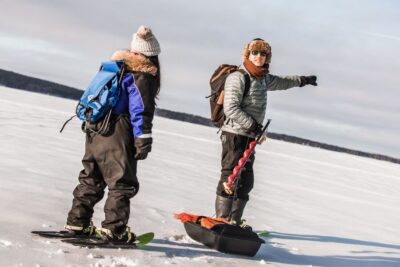
Arctic Reindeer Farm Experience with Snowshoeing in the Wild
Read our review →Browse the lists this tour appears in