
Review · HELSINKI TOURS
Helsinki: Architectural Highlights Guided Walking Tour
Helsinki’s story is written in its buildings, and this three-hour architecture walk reads it street by street. You move from Engel’s grand neoclassical center to Aalto’s warm modernism, then into striking newer spaces such as Oodi and Amos Rex. Guide Zana, a sociology PhD student, adds the social and political background that turns façades into stories.
I like two things right away: the small group of up to six, which makes questions easy, and the number of interiors included. You do not simply point cameras at Helsinki Cathedral and move on. You may step inside the National Library, Academic Bookstore, Central Station, Oodi, and other buildings that are easy to miss on your own.
The main consideration is the walking. Expect 5 to 6 kilometers over three hours, in weather that may be cold, wet, or windy. The tour runs rain or shine, and some office interiors may not be open on weekends, so a weekday booking can give you the fullest architectural look.
Key points at a glance

- A compact tour with a wide architectural range: See neoclassical, Art Nouveau, Nordic Classicism, functionalism, modernism, and contemporary design in central Helsinki.
- Interiors matter here: The route includes places such as the National Library, Academic Bookstore, Central Library Oodi, and Central Station.
- A guide who connects buildings to society: Zana brings in Finnish history, politics, customs, language, and everyday life alongside design.
- A genuinely small group: With no more than six participants, the pace can stay flexible and questions do not get lost.
- Custom focus available: Tell the provider in advance if you want more attention on a particular period or architectural style.
- Good value for a first Helsinki visit: At $56 per person, the tour covers three hours and a large central route without added transport costs.
Why Helsinki works so well as an architecture walk
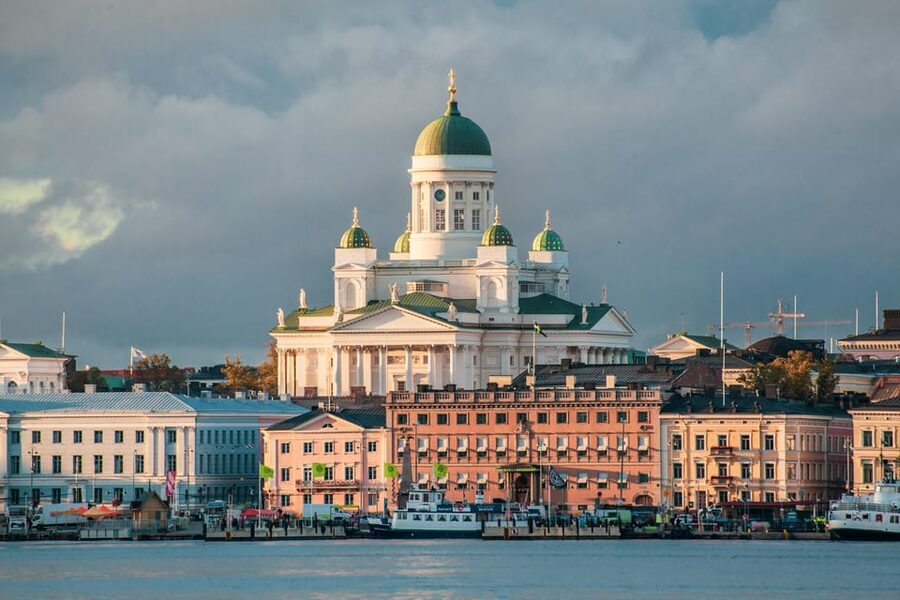
Helsinki is unusually easy to read on foot. The central area is compact, yet its buildings reflect several different chapters of Finnish history and identity. In a single morning or afternoon, you can see a Russian imperial-era civic center, late nineteenth-century romantic design, early twentieth-century commercial buildings, practical modernism, and bold public architecture from the present day.
That range gives this tour more substance than a simple city stroll. You are not only looking at attractive buildings. You are seeing how Helsinki changed from a capital shaped by outside powers into a city that puts Finnish design, public services, and daily life at the center.
The route also shows a useful Finnish habit: important public buildings are often made for ordinary use, not just admiration. Libraries, chapels, cafés, bookshops, and cultural centers are part of the experience. Oodi is the clearest example, but the same idea appears in older buildings that still welcome people inside.
The guide’s sociology background is a good fit for this subject. Architecture can become dry when reduced to dates and names. Here, you can ask why a building matters, what it says about Finnish society, and how Helsinki’s values appear in public spaces.
More Walking Tours in Helsinki:
- A Finntastic Walking Tour in Helsinki
★ 5.0 · 700 reviews - Epic Helsinki: English Speaking Walking Tour
★ 4.9 · 192 reviews - Helsinki walking tour with a city planner
★ 5.0 · 175 reviews
Starting at Fazer Café Kluuvikatu
The meeting point is in front of Fazer Café on Kluuvikatu. This is a practical central starting place, and the tour ends back here, so you do not need to arrange transport between the beginning and end.
You should arrive ready to walk rather than expecting a series of long stops indoors. The route covers 5 to 6 kilometers, with frequent pauses for explanation and photographs. Wear shoes that are comfortable on city streets and bring clothing suited to the forecast. Helsinki weather can change quickly, and the tour continues in rain.
Because the group is limited to six, the guide can usually keep the pace personal. That matters on an architecture tour, where one person may want to ask about a carved doorway while another wants more context about Aalto or Finnish politics.
Senate Square and the neoclassical heart of Helsinki
Senate Square is the natural opening chapter. Its broad layout and pale neoclassical buildings create one of Helsinki’s clearest civic spaces. The square helps you understand the city as a planned capital rather than a medieval old town.
The tour spends about 15 minutes here, enough time to look beyond the postcard view. The surrounding buildings show how architecture was used to give Helsinki authority and order. This is also a good place to establish the larger timeline before moving into more varied styles.
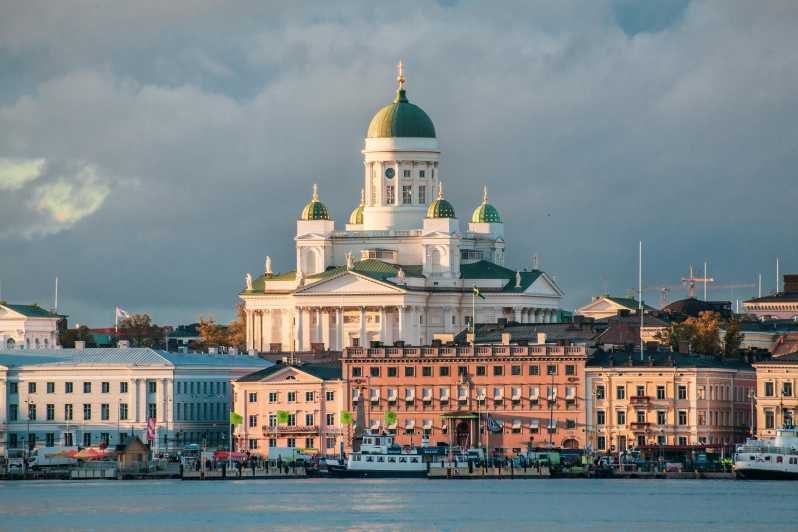
Helsinki Cathedral is next, seen partly from the outside with a short guided stop. Its steps and bright profile are among the city’s most familiar sights, but the value of having a guide here is the explanation of how the cathedral fits into the square and the city’s political past.
Do not expect a long interior visit at every stop. The itinerary mixes guided pauses, pass-bys, and short visits, allowing the tour to cover a lot of ground.
The National Library and the city’s interior treasures
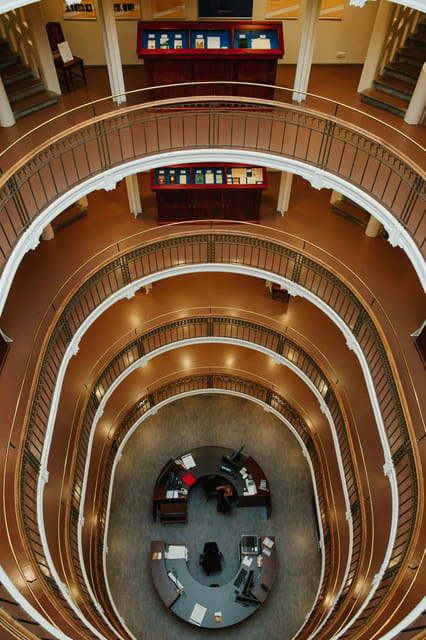
The National Library of Finland is one of the early highlights. The visit lasts about 15 minutes, and this is exactly the sort of place many independent walkers might pass without entering. Its interior gives you a different sense of Helsinki from the open square outside.
The tour’s strength is its attention to details inside buildings. Several people who took the walk especially valued being led into places that do not look like obvious tourist attractions from the street. You may notice decorative work, proportions, and materials more clearly once someone explains what to look for.
A short stop at Robert’s Coffee Jugend shifts the mood toward Helsinki’s Art Nouveau tradition. The setting connects everyday café culture with the city’s early twentieth-century design. It is a useful reminder that architecture here is not confined to museums. You encounter it while having coffee, shopping, or crossing town.
Food and drinks are not included, so treat the café stops as architectural visits rather than included refreshment breaks.
A few more Helsinki half-days to weigh up
- Helsinki: Sightseeing Canal Cruise with Audio Commentary
★ 4.5 · 1,299 reviews - From Helsinki: Nuuksio National Park Half-Day Trip
★ 4.8 · 688 reviews - Helsinki: Tallinn Guided Day Tour with Ferry Crossing
★ 4.6 · 670 reviews - Helsinki: Hop-On Hop-Off City Bus Tour
★ 4.2 · 585 reviews
Esplanadi, Kappeli, and the public face of design

Kappeli and Esplanadi bring the route into one of central Helsinki’s most recognizable public spaces. Esplanadi is a green urban promenade framed by restaurants, shops, and historic buildings. It shows how the city makes room for social life right in the center.
The short Kappeli stop is followed by around 10 minutes in Esplanadi. The pacing gives you time to connect the buildings with the way Helsinki is used. This is not only a route through façades. It is also a walk through places where people meet, eat, read, and linger.
The nearby monument to Johan Ludvig Runeberg adds a cultural layer. Runeberg is an important Finnish literary figure, and the monument helps tie the city’s architecture to national identity. You will likely get more from this stop if you are interested in how Finnish culture developed alongside the capital’s physical growth.
Academic Bookstore and Rautatalo: modern Helsinki in daily use
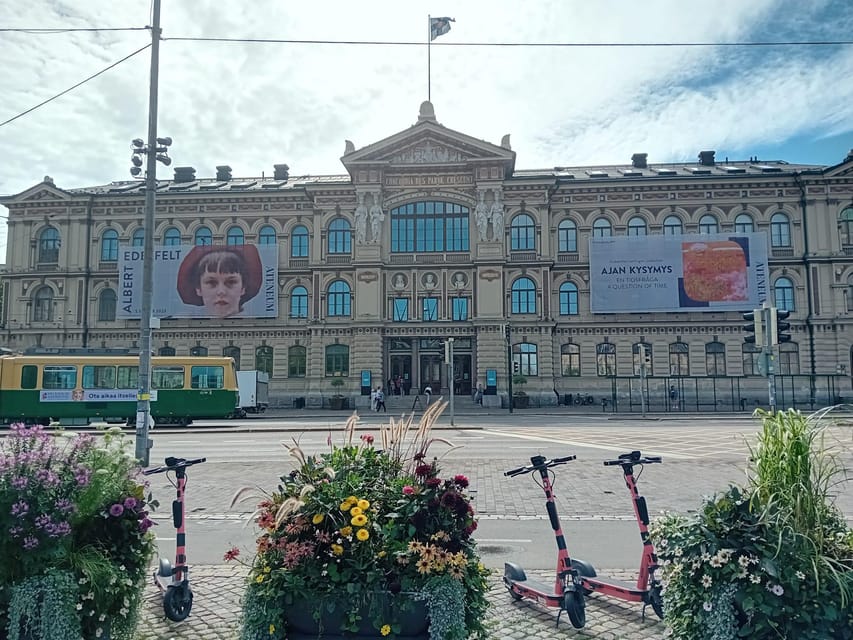
The Academic Bookstore is one of the route’s most rewarding modern stops. Designed by Alvar Aalto, it is a working commercial space, not a preserved shell. That makes the visit useful: you can see how modernist ideas function when people are shopping, reading, and moving through the building.
The stop lasts about 10 minutes. Pay attention to the relationship between light, open space, and circulation. A guide can point out details you might otherwise treat as simple decoration.
Rautatalo follows with a shorter five-minute visit. It is another chance to see Helsinki’s move toward functionalist and modern commercial architecture. The contrast with Senate Square is part of the point. The city did not abandon its older civic core, but it added new styles as business and urban life changed.
One small limitation is that the tour may spend more time on certain buildings or periods than others. If you want a detailed focus on Aalto, Art Nouveau, Nordic Classicism, or another style, tell the provider before the tour begins. Customizing in advance is one of the better features here.
Helsinki Central Station and the power of arrival

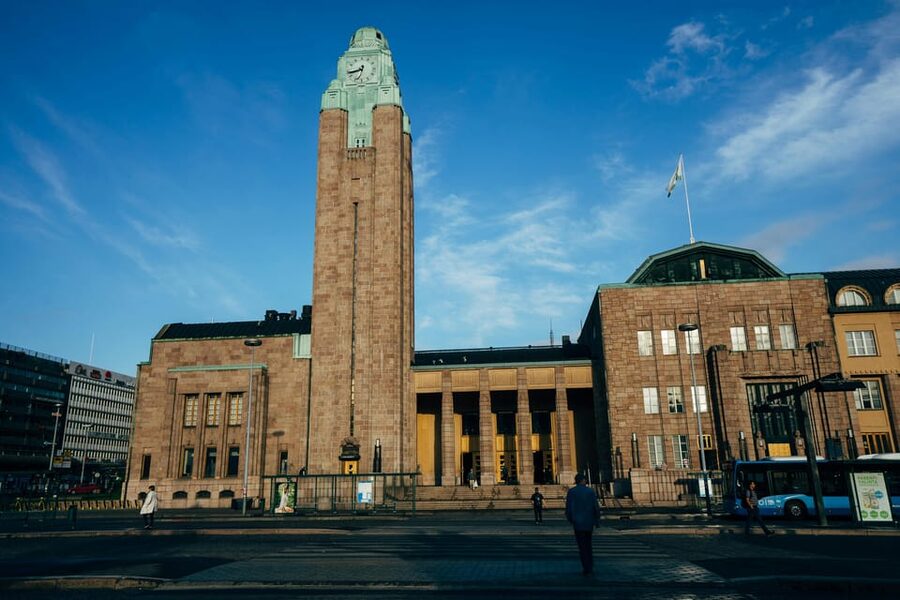
Helsinki Central Station gets about 10 minutes. Stations are often the best places to understand a city’s ambitions, and this one combines practical transport with a strong architectural identity.
The stop also gives the tour a chance to discuss Eliel Saarinen and the national romantic or Nordic Classicist direction associated with the building. Look at how the station presents movement, arrival, and civic importance. It is both a place to catch a train and a formal gateway into the capital.
The tour does not turn this into a long museum visit. Instead, you get a focused explanation before continuing toward newer parts of central Helsinki. That keeps the walk moving, though anyone wanting extensive architectural analysis may wish for more time here.
Sanomatalo and Kansalaistori: Helsinki opens outward
At Fazer Café Sanomatalo, the route pauses for about 10 minutes. The building and its surroundings show a more recent Helsinki, shaped by media, public access, and open urban space.
From there, the walk continues to Kansalaistori, or Citizens’ Square. This is an important transition point. Older Helsinki often feels formal and stone-built. Kansalaistori is more open, contemporary, and designed for public gathering.
The 15-minute stop helps prepare you for Oodi, the tour’s major modern highlight. It also shows why Helsinki was named World Design Capital in 2012 and is recognized as a UNESCO City of Design. Design here is not just a label for handsome objects. It is part of how public space is planned and shared.
Oodi, the wave-shaped heart of the route
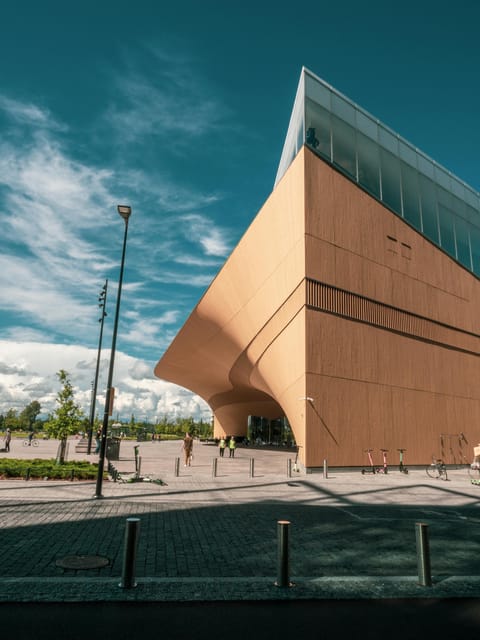
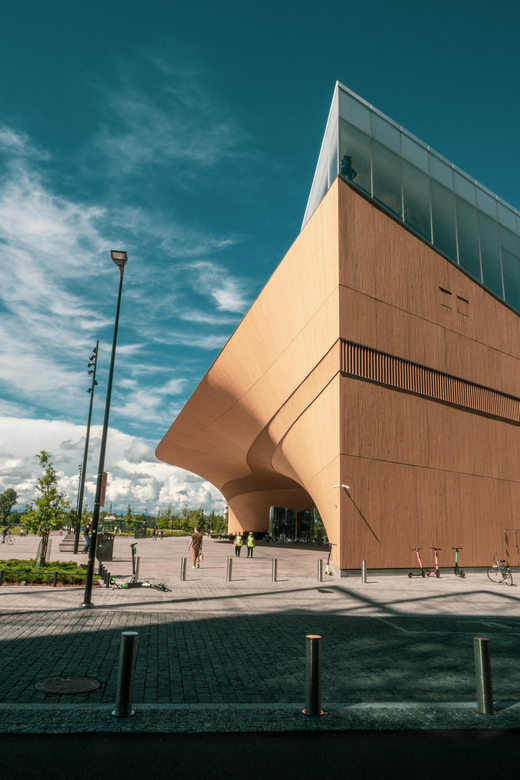
Central Library Oodi receives about 20 minutes, the longest stop on the itinerary. That is sensible. Oodi is a library, but it also works as a public living room and community center.
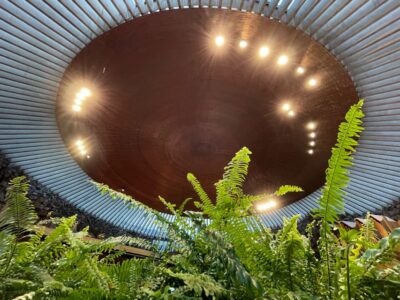
Its wave-like form is memorable from the outside, while the interior makes the stronger case for visiting. The building is designed around public use, and the tour gives you time to notice how its spaces support more than book borrowing. The building has been singled out as a favorite stop by many people who took this walk, and I can see why. It is the clearest example of Helsinki’s modern civic spirit.
For you, Oodi may be the point where the tour shifts from architecture as visual style to architecture as social policy. Ask about how the building reflects Finnish ideas of access, learning, and community. The guide can also connect it to the broader story of contemporary Helsinki.
If you have only a short time in the city, Oodi is worth returning to after the tour. Twenty minutes gives you a useful introduction, but not enough time to see every part of a large public building.
Amos Rex, Kamppi Chapel, and a change in scale
The route then reaches Amos Rex, a contemporary art museum known for its unusual exterior forms. The guided stop is short, about five minutes, but it adds a strong contemporary note after the older buildings and Oodi.
You continue to Kamppi Chapel, seen with a brief guided stop and pass-by. Its quiet, curved wooden form differs sharply from the grand scale of Senate Square or Central Station. The building shows how a small structure can create a distinct atmosphere in a busy part of the city.
These stops are concise, so think of them as introductions rather than full visits. If Amos Rex is high on your list, you will need separate time for the museum itself. The walking tour helps you understand its place in Helsinki’s recent design story, but it does not replace an admission visit.
The Pohjola Insurance Building and the route home
The Pohjola Insurance Building is the final major architectural stop before returning to Fazer Café Kluuvikatu. Its carved details make it especially interesting for anyone who enjoys close-looking.
This is where a guide’s eye helps. Helsinki’s older commercial buildings often reward you with small figures, motifs, and references that are easy to miss while walking past. The Pohjola building gives you a chance to look closely at the decorative side of Finnish architecture before the tour ends.
The walk then returns to the starting point. With no transport included or needed, the route stays focused on central Helsinki from beginning to end.
What $56 buys you
At $56 per person, this is not the cheapest way to stroll through central Helsinki. It is a fair price if you value access, interpretation, and a route that covers far more than the obvious sights.
You are paying for three hours with a local English-speaking guide, a group capped at six, and a carefully connected sequence of buildings. The strongest value comes from the interiors and the context. On your own, you can photograph Senate Square, Oodi, and Central Station. You may not think to enter the National Library, Academic Bookstore, or other significant buildings, and you may not know what details deserve attention.
The price makes less sense if you only want a quick orientation or prefer to walk silently at your own pace. It also may feel high for visitors who already know Helsinki’s architecture well.
You can reserve now and pay later, and cancellation is free up to 24 hours before the start. Those terms help if your schedule is still shifting.
Who should book this walk
I would recommend it most strongly for a first visit, a short stay, or an afternoon between other plans. It gives you a useful mental map of central Helsinki and helps you decide which buildings deserve a second look.
It suits people who enjoy architecture but do not want a lecture detached from daily life. It also works well for anyone interested in Finnish culture, politics, design, or urban planning. The guide can answer questions across those subjects, and the small group makes discussion practical.
Families with older children may appreciate the variety of interiors and the steady movement, though the 5 to 6 kilometer distance still requires reasonable stamina. It is not suitable for wheelchair users, and the rain-or-shine policy means you should take the weather seriously.
Try to book on a weekday if possible. Some office buildings may not be open on weekends, which can reduce the number of interiors available. Also, send your preferred architectural period or style in advance if you have one. That is the best way to make the walk feel tailored rather than simply broad.
Should you book the Helsinki architecture walk?
Book it if you want Helsinki explained through its buildings, not just shown to you. The route is broad, the group is small, and the mix of interiors makes the experience more useful than a basic outside-only city tour.
The best parts are Oodi, the National Library, Academic Bookstore, Central Station, and the smaller design details at places such as the Pohjola Insurance Building. Zana’s approach, combining architecture with history, culture, customs, and social context, is another strong reason to choose it.
Skip it if 5 to 6 kilometers sounds tiring, if poor weather will spoil your day, or if you want a slow specialist tour devoted to one architect. For most visitors with three hours to spare, though, this is a smart introduction to Helsinki, with enough substance to shape the rest of your stay.
FAQ
How long does the Helsinki architecture walking tour last?
The tour lasts three hours.
How far do you walk?
The tour involves approximately 5 to 6 kilometers of walking.
Where does the tour start?
You meet the guide in front of Fazer Café Kluuvikatu.
Where does the tour end?
The walk returns to Fazer Café Kluuvikatu.
What language is the tour offered in?
The live tour guide speaks English.
How large is the group?
The group is limited to six participants.
What happens if it rains?
The tour takes place rain or shine, so bring weather-appropriate clothing.
Recently added around Helsinki
- Helsinki: Guided Kayak Tour in Eastern Helsinki Archipelago★ 5.0 · 3 reviews
- Helsinki: Express Walk with a Local in 60 minutes★ 3.7 · 3 reviews
- From Helsinki: Guided Day Trip to Tallinn by Ferry & VIP Car★ 5.0 · 3 reviews
- Private Porvoo Tour & Visit Runeberg’s National Poet House★ 5.0 · 3 reviews
- The Instagrammable Places of Helsinki with a Local★ 5.0 · 3 reviews
- Redrib sunset lounge experience★ 5.0 · 3 reviews
- Turku tour from Helsinki★ 3.5 · 3 reviews
- Helsinki City 3-Hour Kayak Trip★ 5.0 · 3 reviews
Helsinki Tours, compared.

Sightseeing Canal Cruise with Audio Commentary
Read our review →




Browse the lists this tour appears in