

Review · HELSINKI TOURS
Helsinki: Architecture Walking Tour with Expert
Helsinki’s best architectural lesson is found outdoors, one city block at a time. In three hours, this small-group walk connects neoclassical Senate Square with Jugendstil, Nordic classicism, functionalism, and the clean lines of modern Finland. The city center becomes a readable timeline rather than a jumble of handsome façades.
I like two things right away. First, guide Emek links buildings to Finnish politics, climate, culture, and ordinary life, so this is not just a parade of architects’ names. Second, the group is limited to six people, which gives the walk a personal feel and makes it easier to ask questions. The main consideration is simple: you will walk 3 to 4 miles, or 5 to 6 kilometers, outside in all weather.
Key points to know before you book
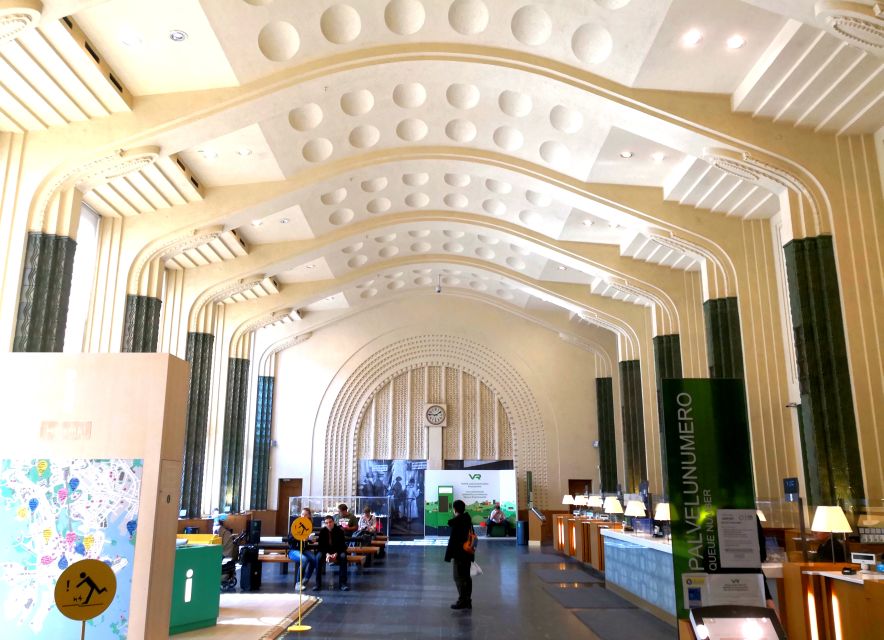
- Eight architectural eras in one compact city center: See neoclassical, Gothic Revival, Art Nouveau, Jugendstil, Nordic classicism, modernism, functionalism, and contemporary design.
- Emek brings architecture into everyday life: His talks connect buildings with Finnish history, politics, climate, and local customs.
- Small groups change the experience: With no more than six participants, the pace can respond to the group’s interests and energy.
- The route includes major landmarks and easy-to-miss interiors: You may enter places such as the National Library of Finland, the Central Railway Station, Pohjola, and Aalto-designed buildings.
- A year-round walk with real weather: Comfortable shoes and proper clothing matter, especially in winter, when temperatures can be severe.
- A useful first-day introduction: The tour gives you a framework for seeing Helsinki on your own during the rest of your stay.
Starting at Aleksanterinkatu: a practical beginning
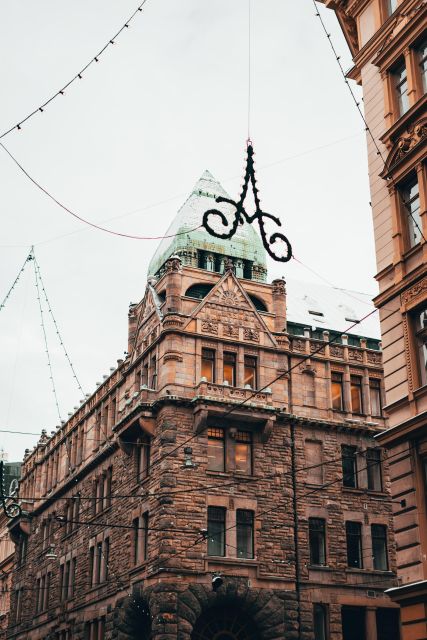
The meeting point is on the corner of Aleksanterinkatu and Kluuvikatu, outside the Nanso Clothing Store at Aleksanterinkatu 9B. Guide Emek waits there, so arrive with enough time to identify the storefront and settle in before the walk begins.
The tour lasts three hours and runs in English. With a maximum of six people, it is much more intimate than a large city walk. You are not being herded behind a raised umbrella, and you can usually ask for clarification when a building, architect, or historical period catches your attention.
The route covers central Helsinki on foot. You should expect 5 to 6 kilometers of walking, with stops for explanations and time to look closely at façades, entrances, materials, and details. Comfortable shoes are essential. Helsinki’s streets are easy to walk, but three hours on pavement still adds up.
This is also a rain-or-shine activity. That is not a minor footnote in Finland. Pack weather-appropriate clothing and plan your layers carefully. In cold conditions, the guide can include indoor explanations where possible, but you should still be ready for substantial time outside.
More Walking Tours in Helsinki:
- A Finntastic Walking Tour in Helsinki
★ 5.0 · 700 reviews - Epic Helsinki: English Speaking Walking Tour
★ 4.9 · 192 reviews - Helsinki walking tour with a city planner
★ 5.0 · 175 reviews
Senate Square and the neoclassical Helsinki
Senate Square is the natural place to begin understanding Helsinki’s formal side. Its neoclassical architecture gives the center a calm, ordered appearance, with grand buildings arranged around an open public space.
Here, the value of an expert guide becomes clear. You can look at columns, symmetry, pale stone, and broad façades on your own, but the larger story is harder to see. The square reflects a period when Helsinki was being shaped into an important administrative capital, and architecture helped express that ambition.
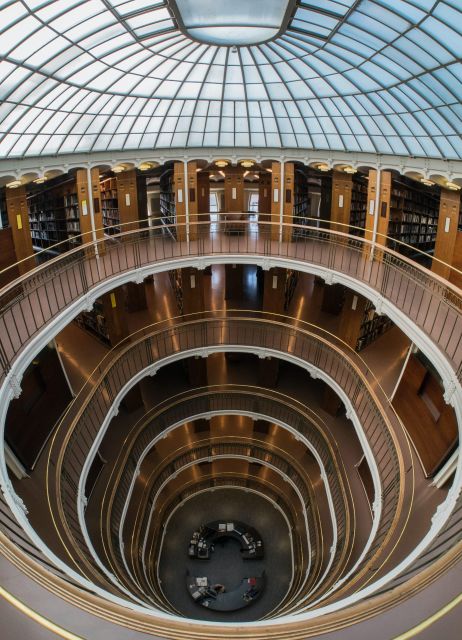
The National Library of Finland adds another layer. Its exterior belongs to the grand civic world around Senate Square, while its interior offers a chance to see how architectural ideas work at a more human scale. The tour may take you inside several buildings, including the library, so you are not limited to street-level views.
I especially like this early section for first-time visitors. It gives you a visual vocabulary that makes later stops easier to understand. After seeing the restraint of neoclassicism, the decorative energy of Jugendstil feels more dramatic.
Jugendstil details at JugendHall and the Pohjola Insurance Building

Helsinki is famous for its Art Nouveau tradition, often called Jugendstil in Finland. The style feels closely tied to local identity, with strong forms, natural motifs, heavy materials, and decorative details that can seem both romantic and rugged.
JugendHall is one of the stops that helps you see this period as more than decoration. Look for the way the building presents itself from the street, then notice how its details contribute to the mood of the whole structure. A guide can point out features you would likely pass without a second glance.
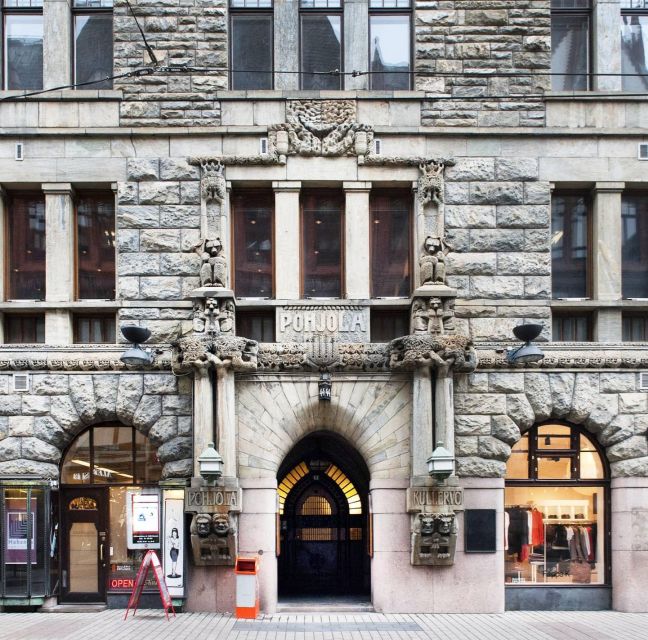
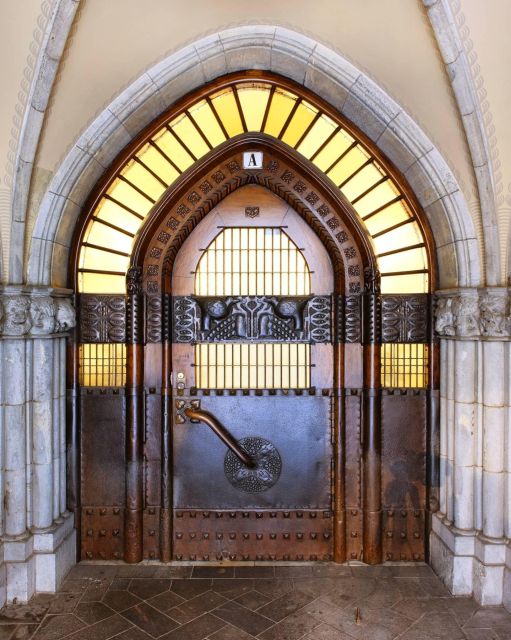
The Pohjola Insurance Building gives the style a particularly Finnish flavor. Its architecture is not simply about making a building ornate. It reflects ideas about national culture and the use of historic or natural imagery to create a distinctive Finnish character.
This is where Emek’s approach sounds especially useful. He does not treat architecture as an isolated art subject. He ties design to social and political influences, showing why a building might look the way it does at a particular moment.
That broader context helps you avoid a common mistake: assuming every old European building belongs to the same general tradition. Helsinki’s Jugendstil has its own tone, and this walk explains how to recognize it.
The Central Railway Station and the Saarinen connection
The Central Railway Station is one of Helsinki’s essential architectural sights. It is practical infrastructure, but it also has the presence of a major civic monument.
The station is associated with Eliel Saarinen, one of the architects highlighted on the tour. Its design helps bridge decorative historic styles and the more stripped-back forms that would shape later Finnish architecture. Look closely at how the building balances a powerful exterior with the needs of movement, crowds, and transport.
This stop matters because it shows how architecture works when a building must serve thousands of people. The station is not merely an object to photograph. Its entrances, halls, scale, and strong visual markers all support its public purpose.
You may also go inside here. That makes the explanation more concrete, especially in poor weather. Instead of standing on a sidewalk while trying to imagine the interior, you can connect the outside design with the spaces people actually use.
If you are visiting Helsinki by train, this stop has extra value. You will understand the building before you need to navigate it, and you may notice details that would otherwise disappear amid luggage, signs, and arrival-day distractions.
A few more Helsinki half-days to weigh up
- Helsinki: Sightseeing Canal Cruise with Audio Commentary
★ 4.5 · 1,299 reviews - From Helsinki: Nuuksio National Park Half-Day Trip
★ 4.8 · 688 reviews - Helsinki: Tallinn Guided Day Tour with Ferry Crossing
★ 4.6 · 670 reviews - Helsinki: Hop-On Hop-Off City Bus Tour
★ 4.2 · 585 reviews
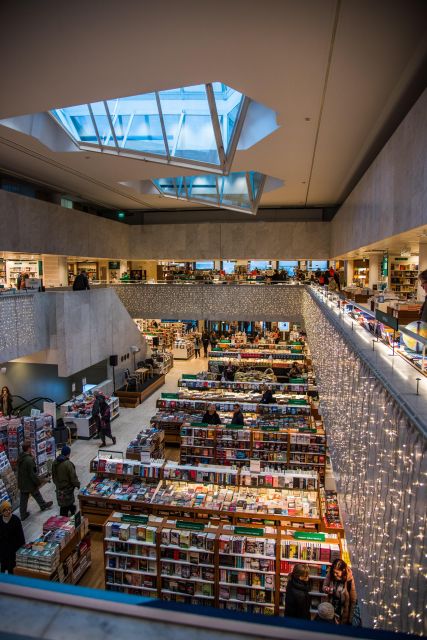
Academic Bookstore and Aalto’s modern restraint
The Academic Bookstore introduces the work of Alvar Aalto, Finland’s best-known modern architect. Aalto’s work is often described through clean lines and modern materials, but the important point is how carefully his spaces are made for people.
The bookstore gives you a chance to see modernism in a public interior rather than only in a monumental façade. Notice the relationship between light, open space, levels, and movement. The building shows that functional design does not have to feel cold or dull.
This is one of the tour’s strongest contrasts. Earlier buildings use ornament, symbolism, and historic references to make their point. Aalto’s approach is quieter, but it still has character. The experience depends less on carved decoration and more on proportion, light, and how the room feels as you move through it.
The guide’s explanations are also useful here because Aalto’s buildings can look deceptively simple. Without context, you might see a pleasant modern interior and move on. With the architectural background, you can begin to understand why certain choices matter.
Oodi and Helsinki’s contemporary public life

The new public library Oodi brings the walk into present-day Helsinki. Its architecture differs sharply from Senate Square, Jugendstil landmarks, and the Central Railway Station, yet it belongs to the same city story.
Oodi is important not only because it is contemporary, but because it is a public building designed around shared civic life. It gives the tour a chance to discuss current Finnish architecture and the social ideas shaping new public spaces.
The contrast with older buildings is the point. You can compare ornament with simplicity, formal authority with openness, and historic references with a more current design language. Helsinki’s architectural identity is not frozen in the past.
This stop also helps explain why a city architecture walk is more useful than a list of famous buildings. You are seeing how different periods answered different needs. Government buildings, insurance offices, railway facilities, bookstores, and libraries all express the values of their time.
A tour that links buildings to Finnish life
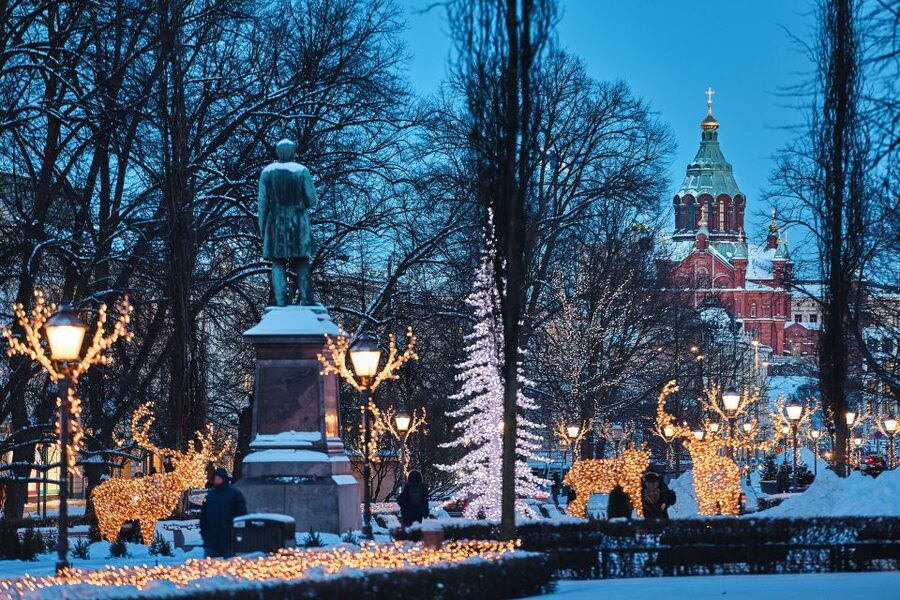
The strongest part of this experience is the connection between architecture and people. The walk does not stop at dates and architectural labels. It also covers Finnish history, ways of life, politics, and the effects of the climate on building design.
That makes the tour suitable even if you are not an architecture specialist. You do not need to arrive knowing the difference between Nordic classicism and functionalism. Emek explains the buildings in a way that connects style with purpose and place.
The pace is another strength. Three hours is long enough to cover a good range of central Helsinki without turning the outing into an exhausting lecture. At the same time, you should not expect a quick highlights walk. There is real distance involved, and you will spend time stopping to listen and examine details.
The small group allows some adjustment. The experience can respond to the interests and knowledge of the people taking part, rather than following a rigid script from start to finish. That matters if you want to ask about a particular architect or compare two buildings more closely.
The guides’ English is also important. Emek has been praised for explaining architecture, history, art, and politics clearly in English, while keeping the talk engaging rather than overly technical. That balance is a good fit for curious visitors who want substance without an academic seminar.
Winter, rain, and the question of comfort
Helsinki’s weather can shape this experience more than the buildings do. The tour operates throughout the year, including winter. One January outing took place at minus 20 degrees Celsius, so you should take the weather warning seriously.
Cold weather does not make the walk impossible, but it changes the rhythm. Gloves, warm layers, a hat, and shoes with good traction will make a major difference. In wet weather, a waterproof outer layer is more useful than an umbrella alone, especially when you need both hands free for walking and looking.
Indoor stops help. The National Library, the railway station, the Pohjola building, and Aalto-related interiors can provide shelter and make the route more manageable. Still, you should book this as an outdoor walking experience, not as a museum tour with occasional steps outside.
Older participants should consider the distance and weather before booking. The guide has adjusted the experience with care for older people, but the physical requirement remains 5 to 6 kilometers on foot. If that distance sounds tiring, this may be better early in your stay, when you can set your own pace for the rest of the day.
Is $70 a fair price?
At $70 per person, this tour is not the cheapest way to look at Helsinki’s buildings. But the small group and expert-led interpretation add real value.
You are paying for three hours of focused guidance, not simply a route between landmarks. The tour brings together architects such as Engel, Saarinen, and Aalto, then places their work in a larger Finnish story. It may also get you into interiors that are easy to miss when exploring alone.
The value is strongest for a first visit. After this walk, you can return to Senate Square, the station, Oodi, or the bookstore with a clearer idea of what you are seeing. The experience can shape the rest of your sightseeing, which makes it more useful than a one-off photo stop.
The price is harder to justify if you already have advanced training in Finnish architecture or want only a quick introduction. You may prefer to walk the center independently and spend the money on a museum or another specialist visit.
The flexible booking terms help reduce the risk. You can reserve now and pay later, and cancellation is free up to 24 hours before the tour for a full refund. Check the available start times when booking, since the tour lasts three hours and may affect the rest of your day.
Who will enjoy this Helsinki walk?
I would choose this tour if you like cities best when you understand why they look the way they do. It suits architecture fans, design students, photographers, history-minded visitors, and anyone who wants a thoughtful introduction to Helsinki.
It is also a good match if you are interested in more than buildings. Emek’s talks connect architecture with Finnish society, political change, climate, and daily life, so the experience gives you cultural context as well as visual detail.
Families with older children may enjoy the variety of stops, though the walking distance and weather deserve attention. It is less suitable for anyone looking for a short, low-effort orientation or a tour conducted mostly indoors.
I especially recommend taking it near the start of a Helsinki stay. It can set up a week of sightseeing by showing you how to read the city. You may not remember every architect’s name, but you will begin noticing the difference between a formal civic building, a Jugendstil façade, and a modern public interior.
Should you book the Helsinki Architecture Walking Tour?
Book it if you want Helsinki to make more sense, not just look attractive. The combination of a maximum six-person group, a three-hour route, indoor and outdoor stops, and Emek’s links between architecture and Finnish life gives the experience real depth.
Skip it if you dislike walking several miles, plan to visit only in poor weather without proper clothing, or want a fast overview with little explanation. For most curious first-time visitors, though, $70 buys a useful lens for the whole city. Start at Aleksanterinkatu, bring good shoes, and let Helsinki’s buildings tell their story one period at a time.
FAQ
How long is the Helsinki Architecture Walking Tour?
The tour lasts three hours.
How far will I walk?
You should be prepared to walk about 3 to 4 miles, or 5 to 6 kilometers.
What language is the tour conducted in?
The live tour guide speaks English.
How large is the group?
The group is limited to six participants.
Where does the tour meet?
Meet at the corner of Aleksanterinkatu and Kluuvikatu, outside the Nanso Clothing Store at Aleksanterinkatu 9B.
What should I bring?
Bring comfortable shoes and clothing suitable for the weather. Tours operate all year, in rain or shine.
Recently added around Helsinki
- Helsinki: Guided Kayak Tour in Eastern Helsinki Archipelago★ 5.0 · 3 reviews
- Helsinki: Express Walk with a Local in 60 minutes★ 3.7 · 3 reviews
- From Helsinki: Guided Day Trip to Tallinn by Ferry & VIP Car★ 5.0 · 3 reviews
- Private Porvoo Tour & Visit Runeberg’s National Poet House★ 5.0 · 3 reviews
- The Instagrammable Places of Helsinki with a Local★ 5.0 · 3 reviews
- Redrib sunset lounge experience★ 5.0 · 3 reviews
- Turku tour from Helsinki★ 3.5 · 3 reviews
- Helsinki City 3-Hour Kayak Trip★ 5.0 · 3 reviews
Helsinki Tours, compared.

Sightseeing Canal Cruise with Audio Commentary
Read our review →





Browse the lists this tour appears in