
Review · HELSINKI TOURS
Helsinki Walking Tour With a Sociologist
Helsinki reveals itself best through its public spaces, and this walk makes that the main event. Instead of racing from landmark to landmark, you connect Finnish society with the city’s architecture, from Senate Square and the Presidential Palace to libraries, markets, and Oodi.
I like the small maximum of six people, which gives you room to ask questions. I also like the unusual focus on libraries and shared civic spaces, including the National Library, the University of Helsinki library, and Oodi. The main drawback is pace: three hours is a lot of ground for one walk, so some listed stops may be brief or viewed from outside.
Key points at a glance
- A sociologist’s view of Helsinki: Zana Balikci explains how buildings, public services, religion, and daily life fit together.
- Small groups of up to six: You get more personal conversation than on a large city walk.
- A strong public-space theme: Libraries, community areas, markets, and civic buildings matter as much as the famous sights.
- A practical central route: The walk begins near Kluuvikatu and ends at Oodi, a useful place to continue exploring.
- Many major sights in three hours: Senate Square, both cathedrals, Kauppatori, Esplanadi, the railway station, and more are included.
- Plan around opening days: The National Library is closed Saturday and Sunday, while the Old Market Hall is closed Sunday.
Why this Helsinki walk feels different

Helsinki has the standard sightseeing circuit: Senate Square, the cathedral, the harbor, Esplanadi, and the railway station. This tour covers those places, but it asks a better question than What is that building? It asks how the building is used, what it says about Finland, and how public life works in the city.
That is the value of having a sociologist as your guide. Zana Balikci brings attention to Finnish social habits, government, religion, education, architecture, and shared spaces. You are not simply collecting photographs. You are building a clearer picture of Helsinki as a functioning capital.
The route also gives you a useful first orientation. You walk through the central area rather than riding between sights, so you begin to understand how the harbor, shopping streets, cultural buildings, railway station, and Töölönlahti area connect. If this is your first day in Helsinki, that map in your head can be more useful than another hour inside a museum.
At $57.67 per person, the walk is not the cheapest way to see the city. But the group limit of six changes the value. You are paying for a three-hour conversation with a local guide, not just a standard script delivered to a crowd. I would consider it worthwhile if you enjoy asking questions and want social context. If you only want quick photographs of the headline sights, a self-guided walk will cost less.
More Walking Tours in Helsinki:
- A Finntastic Walking Tour in Helsinki
★ 5.0 · 700 reviews - Epic Helsinki: English Speaking Walking Tour
★ 4.9 · 192 reviews - Helsinki walking tour with a city planner
★ 5.0 · 175 reviews
Senate Square and Helsinki Cathedral
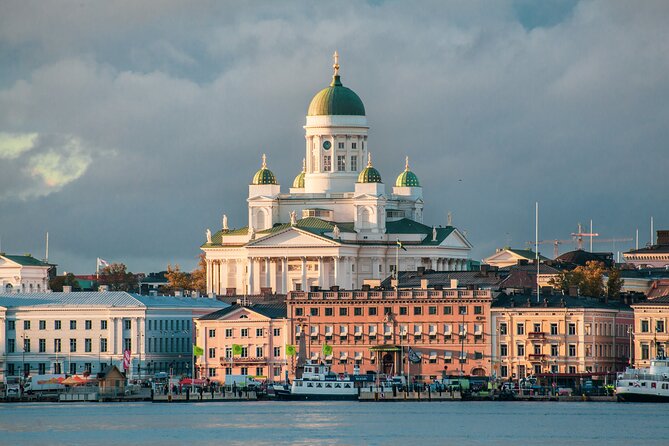
The tour starts near Kluuvikatu and reaches Senate Square, the grand civic heart of central Helsinki. This is where the story of modern Helsinki begins on the route, with the guide explaining the three important buildings around the square and the role they played in shaping the city.
Senate Square is a good opening because it gives you a clear sense of Helsinki’s formal side. The open space, surrounding architecture, and position of the cathedral make it one of the easiest places in the city to understand visually. You have about 15 minutes here, enough for an introduction without turning the first stop into a long lecture.
Helsinki Cathedral is the city’s most famous landmark. The planned visit inside is short, about five minutes, and the admission charge is not included. The brief stop is less about studying every architectural detail and more about learning how Lutheran religious ideas fit into Finnish life.
That distinction matters. The cathedral is a major tourist sight, but the tour treats it as part of the country’s social story. You can ask about religion, national identity, and the way a landmark functions in modern Helsinki. Since the visit inside is brief, you should not expect an extended church tour.
Libraries that explain Finnish public life
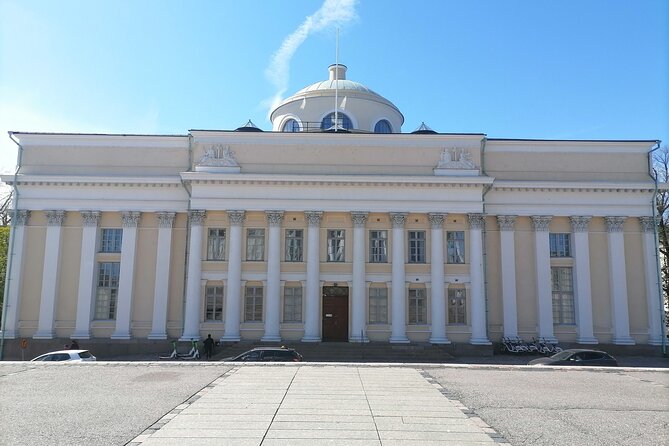
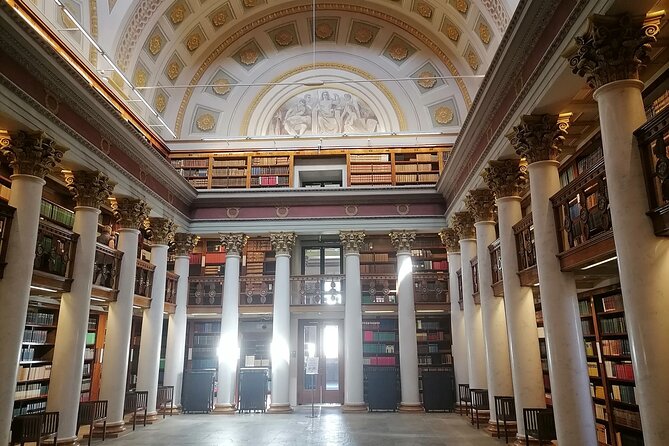
One of the most unusual parts of this walk is its attention to libraries. The National Library of Finland is presented as one of Helsinki’s finest buildings, and its interior can add much to the architectural side of the tour. Entry is free, but the library is closed on Saturday and Sunday, so check your day before booking if this stop matters to you.
The route also includes a cultural and historic look at Helsinki City Museum. The museum helps place the city’s streets and buildings in a wider story of local life, heritage, and change. The supplied schedule does not give a separate time for every cultural venue, so the exact amount of time inside each place can vary.
A particularly useful feature is the chance to see more than one kind of library. The University of Helsinki library and the Academic Bookshop are also part of the experience described by the guide’s past tours. For a book lover, these are not filler stops. They show how Helsinki treats learning and public access as part of ordinary city life.
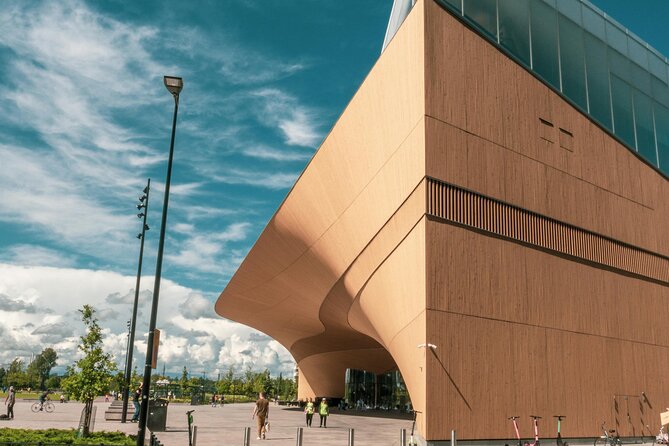
The idea becomes clearest at Oodi, the final stop. You spend about 20 minutes at the Central Library Oodi, where the point is to challenge the narrow idea of a library as a quiet room lined with books. Oodi is presented as a modern public space with a wider role in Finnish life.
You should allow yourself extra time after the tour if Oodi interests you. The official walk ends there, and the 20-minute visit is an introduction rather than a full exploration. This ending also makes practical sense: you finish with a strong example of Helsinki’s modern civic design instead of ending at a random street corner.
Political Helsinki from the Presidential Palace to Parliament

The Presidential Palace on Pohjoisesplanadi gives the tour a short look at Finnish democracy and political history. The listed stop lasts about five minutes and is free. You should think of it as an exterior orientation point, not a palace tour.
That short visit works because the guide’s strength is connecting places rather than lingering at every doorway. You learn where political power sits in the city and how the formal center relates to the public streets around it.
The route also includes the Parliament House, described as the heart of Finnish democracy where national decisions and debates take place. No separate time or admission detail is provided for this stop, so do not book expecting an inside visit unless the guide confirms it. Its value here is likely the setting, the building, and the chance to discuss Finnish government while walking through the capital.
This is one reason the sociologist angle helps. You can ask questions about the relationship between public institutions and everyday life, rather than hearing only dates and architectural labels. The tour gives government a place in the story without turning the walk into a dry civics lesson.
A few more Helsinki half-days to weigh up
- Helsinki: Sightseeing Canal Cruise with Audio Commentary
★ 4.5 · 1,299 reviews - From Helsinki: Nuuksio National Park Half-Day Trip
★ 4.8 · 688 reviews - Helsinki: Tallinn Guided Day Tour with Ferry Crossing
★ 4.6 · 670 reviews - Helsinki: Hop-On Hop-Off City Bus Tour
★ 4.2 · 585 reviews
Uspenski Cathedral and the harbor market
Uspenski Cathedral offers a sharp contrast with Helsinki Cathedral. Completed in 1868, it is the city’s largest and best-known Russian Orthodox church. The listed stop is about five minutes, and admission is not included.
Even a short visit can help you see the religious and cultural variety of Helsinki. The two cathedrals are close enough to compare, yet they represent different traditions and visual styles. If entering Uspenski matters to you, confirm the current access details and any admission requirement before the walk.
From there, the route moves toward Kauppatori, Helsinki’s market square beside the South Harbor. You get about 10 minutes to look around and hear about the area’s history and less obvious details. This is a lively place to orient yourself to Helsinki’s relationship with the sea, trade, food, and public gathering.
The Old Market Hall is nearby and adds a more focused food stop. Opened in 1889, it is one of Finland’s oldest covered market halls. Inside, you may find smoked salmon, reindeer meat, Finnish pastries, local produce, crafts, and souvenirs.
Food is not included, so this is not a tasting tour. Still, the market is a useful place to return after the walk if you want to buy something small or choose a Finnish specialty for lunch. The hall is closed on Sundays, which is important if you want to see the interior. The planned visit lasts about 10 minutes, so save a separate visit for browsing the stalls properly.
Esplanadi, Lasipalatsi, and Helsinki’s design character
Esplanadi is Helsinki’s main boulevard and one of the best places to watch city life pass by. The walk allows about 10 minutes here. That is enough to understand its position in the center, but not enough for a slow café break or an extended stroll.
The route then reaches Lasipalatsi, or the Glass Palace, a striking modern building with glass facades and an inventive design. The stop lasts about 10 minutes and is free. It gives the guide another chance to show how Helsinki mixes older monumental buildings with modern public architecture.
The schedule also includes a look at Helsinki’s Swedish-speaking community and its art scenes. The details are not timed separately, so this part may be woven into the walk rather than presented as a long dedicated stop. You can expect the theme to add another layer to Helsinki’s identity, especially if you ask questions about language and culture.
Kiasma, Finland’s leading modern art museum, is also named along the cultural route. Ateneum, the national gallery, is included as another art and culture reference. No admission or dedicated visit time is listed for either museum, so plan on seeing them as part of the city route unless your guide confirms an interior visit.
The railway station and the walk’s final stretch
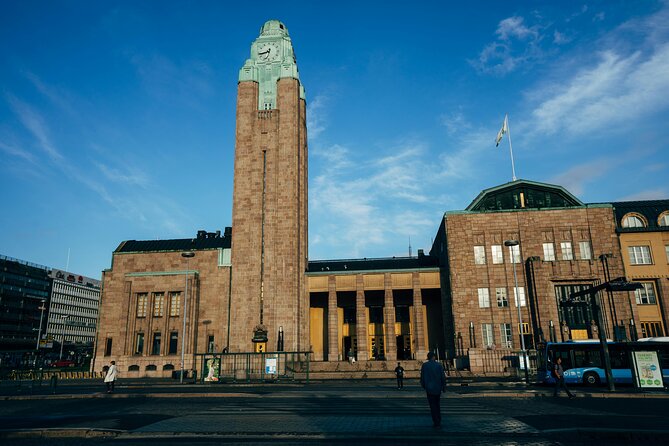
Helsinki Central Railway Station is one of the city’s most recognizable buildings. The stop lasts about 10 minutes, with attention to the four massive statues guarding the entrance and the station’s place in the city center.
This is a smart orientation stop. If you arrive or leave by train, you will know exactly where you are. The station also helps connect the older civic center with the modern cultural district farther north.
The walk continues through a broad collection of civic and cultural landmarks before ending at Oodi. The route is ambitious for three hours, and that is both its strength and its limitation. You cover a surprising amount of central Helsinki, but several sites receive only a few minutes.
I would not choose this experience if you want a slow architectural photography walk or long museum visits. I would choose it if you want the city’s main points tied together by one clear explanation. The route is best understood as an introduction, with notes on where to return later.
What the guide adds to the experience

Zana Balikci is repeatedly described as friendly, patient, and easy to question. Those qualities matter on a tour built around social topics, because Finnish government, religion, language, and public services can raise more questions than a standard sightseeing script allows.
The guide’s background as a graduate student at the University of Helsinki also gives the walk a newcomer’s point of view. You get both an outside perspective and current familiarity with the city. The result should suit you if you prefer conversation over a memorized speech.
The small group is another strong feature. With no more than six people, the guide can adjust the explanation, answer individual questions, and keep the walk from feeling anonymous. One past booking had only three people, which is the kind of group size that makes a city walk feel personal.
The tour also operates in English and uses a mobile ticket. You do not need to arrange transport between stops, since the route is on foot. Wear shoes suited to three hours of walking and check the weather before setting out. The experience requires good weather, and cancellation for poor conditions brings the choice of another date or a full refund.
Who should book this three-hour walk?
I would recommend it to first-time visitors who want a solid Helsinki orientation with more substance than a landmark checklist. It is especially well suited to people interested in architecture, public institutions, libraries, education, religion, and Finnish social life.
It is also a good choice for solo visitors or couples who like small groups and questions. The group cap makes the $57.67 price easier to justify, especially when you use the guide to learn where to eat, what to revisit, and how the central districts fit together.
Book with care if your visit falls on a weekend. The National Library is closed Saturday and Sunday, and the Old Market Hall is closed Sunday. Those closures may not cancel the walk, but they can change what you see inside.
The tour is less suitable for anyone who wants a food tour, a museum tour, or a long interior visit at every landmark. Food and drinks are not included, cathedral admission is not included, and transportation is not provided. Tips are also separate.
Should you book the Helsinki Walking Tour With a Sociologist?
Book it if you want to understand Helsinki as a society, not just photograph it. The combination of Senate Square, both cathedrals, the harbor market, political buildings, libraries, the railway station, and Oodi gives you a broad view of the city in a short time.
The best reason to choose it is the guide’s social and architectural focus, supported by a group size of six or fewer. The main caution is the packed route. Some stops are short, and several cultural venues may be viewed from outside or covered briefly.
For a first visit, I think this is a strong value if you enjoy walking and conversation. Use it to get your bearings, ask plenty of questions, and mark the places you want to revisit at your own speed.
FAQ
How long is the Helsinki Walking Tour With a Sociologist?
The tour lasts approximately three hours.
Where does the tour begin?
The meeting point is Kluuvikatu 3, 00100 Helsinki, Finland.
Where does the tour end?
The tour ends at Helsinki Central Library Oodi, at Töölönlahdenkatu 4, 00100 Helsinki.
Who leads the tour?
The guide associated with the experience is Zana Balikci. The tour is conducted in English.
Are admission fees, food, and transportation included?
No. Food and drinks, transportation, cathedral admission, and gratuities are not included. Several outdoor stops have free admission.
What happens if the weather is poor?
The experience requires good weather. If it is canceled because of poor conditions, you can choose another date or receive a full refund. You can also cancel for a full refund up to 24 hours before the start time.
Recently added around Helsinki
- Helsinki: Guided Kayak Tour in Eastern Helsinki Archipelago★ 5.0 · 3 reviews
- Helsinki: Express Walk with a Local in 60 minutes★ 3.7 · 3 reviews
- From Helsinki: Guided Day Trip to Tallinn by Ferry & VIP Car★ 5.0 · 3 reviews
- Private Porvoo Tour & Visit Runeberg’s National Poet House★ 5.0 · 3 reviews
- The Instagrammable Places of Helsinki with a Local★ 5.0 · 3 reviews
- Redrib sunset lounge experience★ 5.0 · 3 reviews
- Turku tour from Helsinki★ 3.5 · 3 reviews
- Helsinki City 3-Hour Kayak Trip★ 5.0 · 3 reviews
Helsinki Tours, compared.

Sightseeing Canal Cruise with Audio Commentary
Read our review →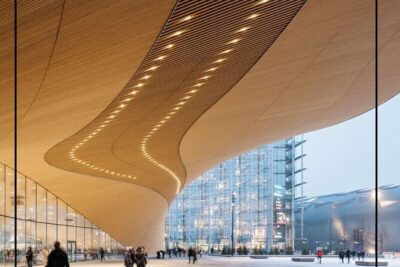





Browse the lists this tour appears in